The Big Broadcast of 1938 (1938) Universal Blu-ray Review
The Big Broadcast of 1938 is a glorious mess. It is a film where W.C. Fields plays golf on a flying motorcycle, where Bob Hope...
- Pick up The Big Broadcast of 1938 at <a href="https://moviezyng.com/products/the-big-broadcast-of-1939">MovieZyng</a>.
- The End of an Era: Paramount's Big Broadcast Series
- W.C. Fields: The Last Paramount Hurrah
- Bob Hope: The Birth of a Legend
- The Rest of the Variety Show: Raye, Lamour, and a Wagner Soprano
- From the Vaults: Nothing in the Vault
- The Picture: An Old Master on a New Disc
- The Sound: Mono for a Musical
- The Final Verdict: Should You Buy The Big Broadcast of 1938?
The Big Broadcast of 1938 is a glorious mess. It is a film where W.C. Fields plays golf on a flying motorcycle, where Bob Hope juggles three ex-wives on an ocean liner, where a Norwegian opera soprano performs Wagner’s “Brunnhilde’s Battle Cry” between comedy sketches, where a swamp creature made of animated water teaches a band its “rippling rhythm,” and where two brothers race their steamships across the Atlantic using technology that converts radio waves into electricity.
The Big Broadcast of 1938 makes no sense. It is not supposed to make sense. It is the last and most extravagant of Paramount’s Big Broadcast variety films, a series that had been running since 1932, and it exists to put as many stars, as many songs, and as many spectacles on screen as ninety-one minutes can contain. That it also happens to be the film where Bob Hope made his feature debut and first sang “Thanks for the Memory,” the Oscar-winning song that would become his lifelong signature, makes The Big Broadcast of 1938 one of the most historically significant hodgepodges in American cinema.
Pick up The Big Broadcast of 1938 at MovieZyng.#
Universal has released The Big Broadcast of 1938 on Blu-ray on March 31, 2026, marking the film’s first standalone high-definition release. I need to be upfront about the disc itself before we get into the film: this is not a new restoration. Universal has ported an existing master to Blu-ray without performing a new scan of the original camera negative, and the video presentation reflects that decision. The Big Broadcast of 1938 deserved better from a technical standpoint, and I will address that honestly in the A/V sections below. But the film is available on Blu-ray, which is more than can be said for the three earlier Big Broadcast films (1932, 1936, and 1937), and owning The Big Broadcast of 1938 in any HD format represents a genuine improvement over the previous DVD-only situation.
Table of Contents#
The End of an Era: Paramount’s Big Broadcast Series#
The Big Broadcast films were Paramount’s answer to a simple commercial question: how do you put a radio variety show on a movie screen? The series began with The Big Broadcast of 1932, which launched Bing Crosby’s film career, continued through The Big Broadcast of 1936 (featuring Burns and Allen, Ethel Merman, and Amos ‘n’ Andy) and The Big Broadcast of 1937 (with Benny Goodman and Leopold Stokowski), and concluded with The Big Broadcast of 1938.
Each film used a loose narrative framework to string together musical performances, comedy routines, and specialty acts in a format that replicated the variety-show experience of Depression-era radio for a theatrical audience.
The Big Broadcast of 1938 arrived as the series was running out of creative steam, and Paramount knew it. The studio invested over $1 million in the production, a substantial budget for 1938, and hired Mitchell Leisen to direct. Leisen was one of Paramount’s most visually sophisticated directors, a former art director and costume designer whose eye for production design elevated everything he touched.
Before becoming a director, Leisen had worked as an art director on Cecil B. DeMille productions including The King of Kings (1927) and The Sign of the Cross (1932), and that background gave him an instinctive understanding of how to fill a frame with visual interest. He would go on to direct some of Paramount’s most stylish films of the 1940s, including Remember the Night (1940), Hold Back the Dawn (1941), and Lady in the Dark (1944), but The Big Broadcast of 1938 showcases his production design sensibility at its most flamboyant.
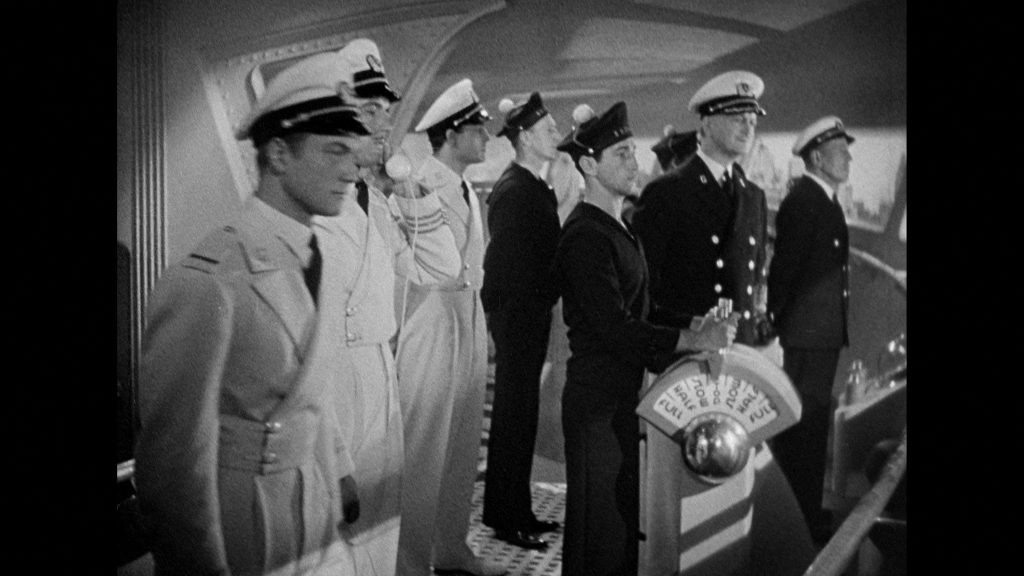
The Big Broadcast of 1938’s ocean liner sets, inspired by industrial designer Norman Bel Geddes’ futuristic “Liner of the Future” concepts, are Streamline Moderne spectacles that give the film a visual grandeur that compensates for the narrative’s near-total incoherence. Art direction by Hans Dreier (one of the most awarded designers in Hollywood history, with three Oscar wins and over twenty nominations) and costumes by Edith Head (who would eventually win eight Academy Awards, more than any other woman in Oscar history) reinforce The Big Broadcast of 1938’s status as a prestige production, even if the script connecting the musical numbers could generously be described as a suggestion.
The Big Broadcast of 1938 may not have a coherent story, but it looks like a million dollars, because that is exactly what Paramount spent on it.
W.C. Fields: The Last Paramount Hurrah#
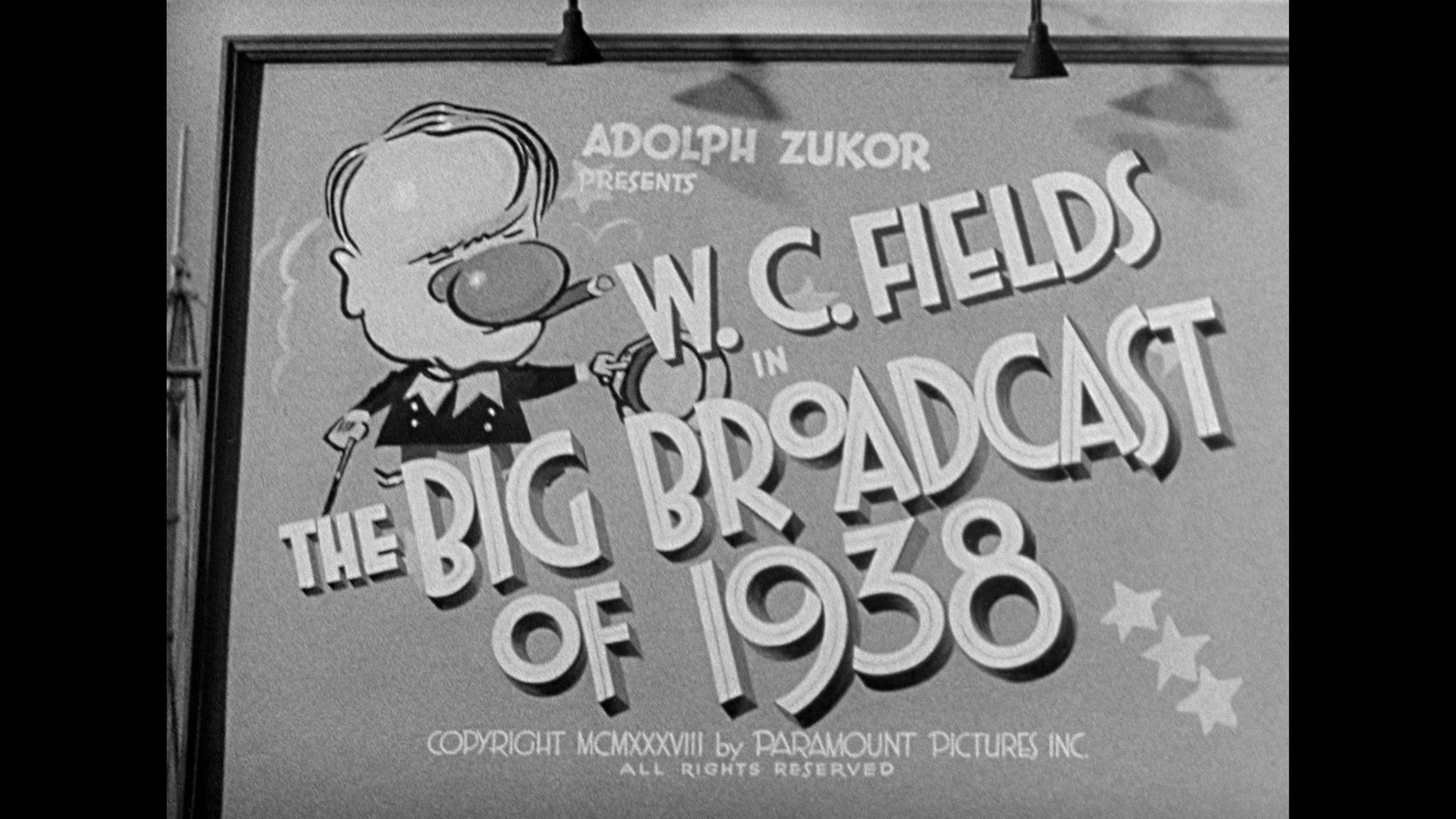
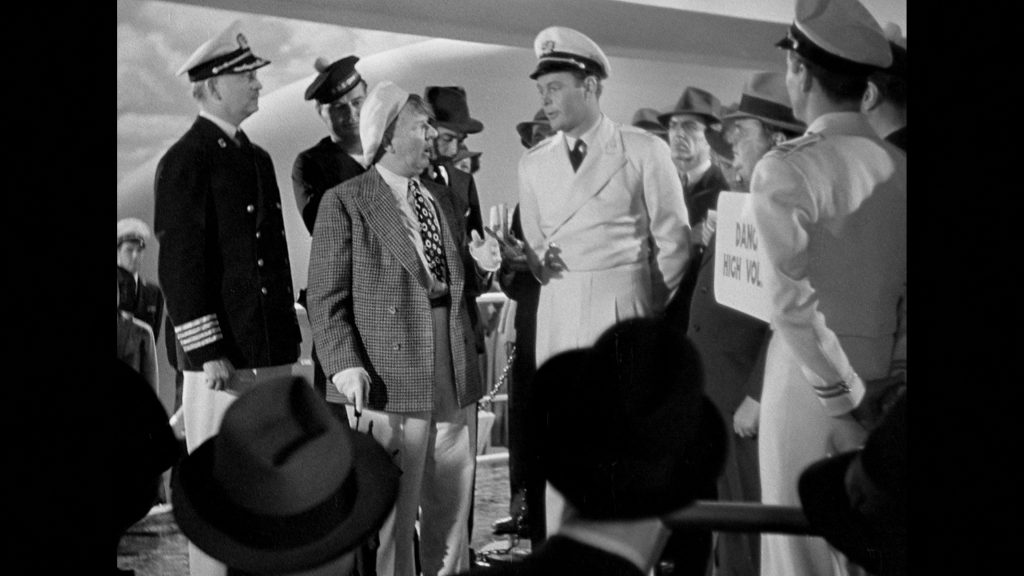
W.C. Fields is the above-the-title star of The Big Broadcast of 1938, and the film represents his final work for Paramount, the studio where he had built his film career. Fields plays dual roles: T. Frothingill Bellows, the wealthy owner of the S.S. Gigantic, and his nearly identical brother S.B. Bellows, whom T.F. dispatches to the rival ship S.S. Colossal in hopes that S.B.’s natural capacity for disaster will sabotage the competition. Naturally, S.B. ends up on the Gigantic instead, and Fields-flavored chaos ensues.
Fields wrote five of his own comedy sequences for The Big Broadcast of 1938, including routines set in a gas station, a golf course, a barber shop, a pool room, and an orchestra pit. The golf sequence, which features Fields playing an increasingly absurd round on what can only be described as a flying motorcycle golf cart, is vintage Fields: the humor is in the disconnect between the character’s absolute confidence and the escalating insanity of his circumstances. The pool sequence showcases the physical comedy chops that had made Fields one of the biggest names in American entertainment since the Ziegfeld Follies. These sequences in The Big Broadcast of 1938 are essentially standalone short films embedded within the larger production, and they represent some of the last great Fields performances before his move to Universal, where he would make his final films (The Bank Dick, My Little Chickadee, Never Give a Sucker an Even Break) with a different studio’s sensibility.
Bob Hope: The Birth of a Legend#
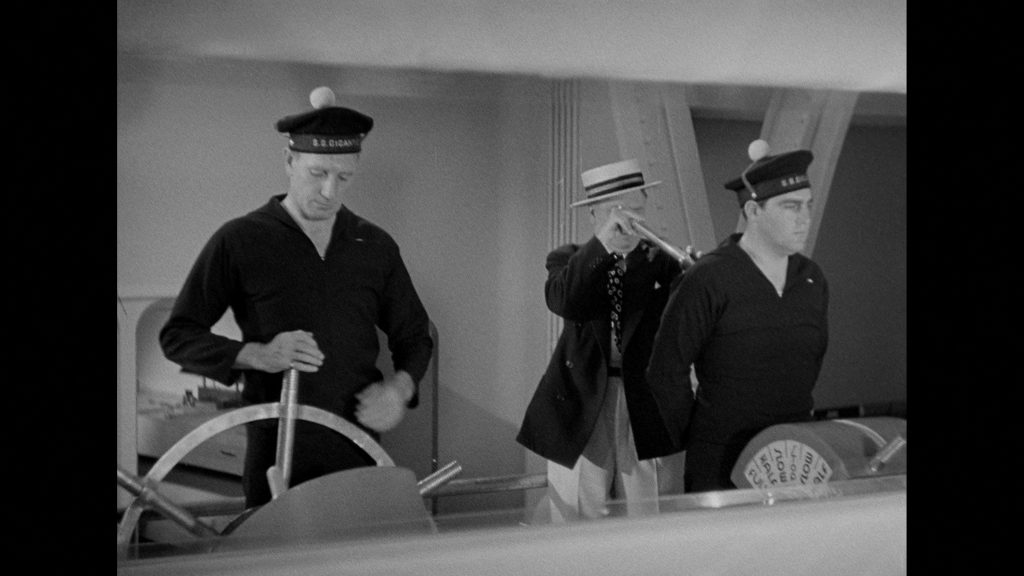
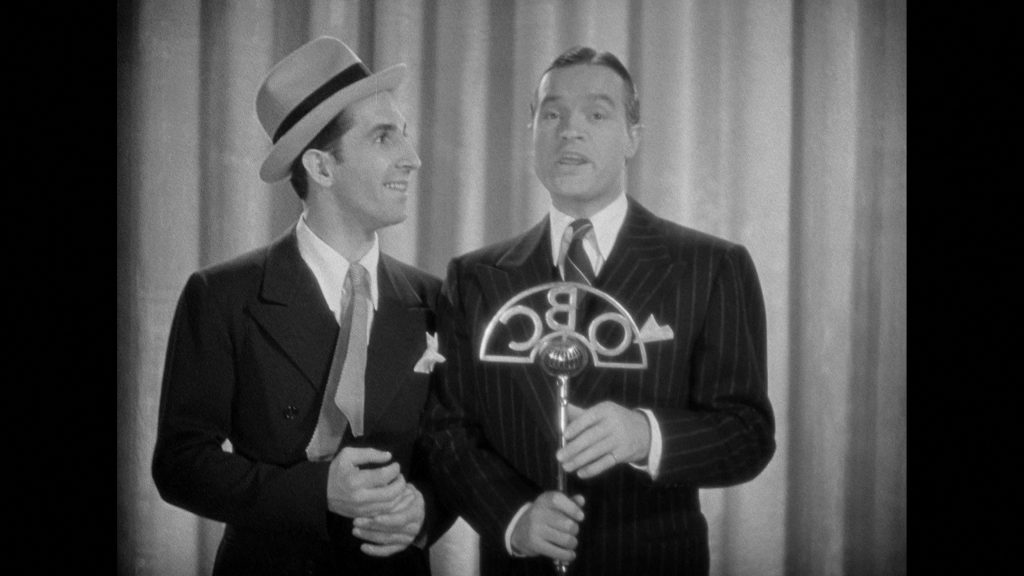
Bob Hope had been a radio and vaudeville star for years before The Big Broadcast of 1938, but this was his feature film debut, and it is remarkable how fully formed his screen persona already was. Hope plays Buzz Fielding, a radio emcee on the Gigantic who introduces the musical acts while managing the complications of three ex-wives (all of whom happen to be aboard) and a current fiancee, Dorothy Wyndham (Dorothy Lamour, in the first of many, many Hope-Lamour pairings). Hope’s delivery in The Big Broadcast of 1938 is already the rapid-fire, wisecracking style that would carry him through seven decades of entertainment, and his comic timing is impeccable from the first frame.
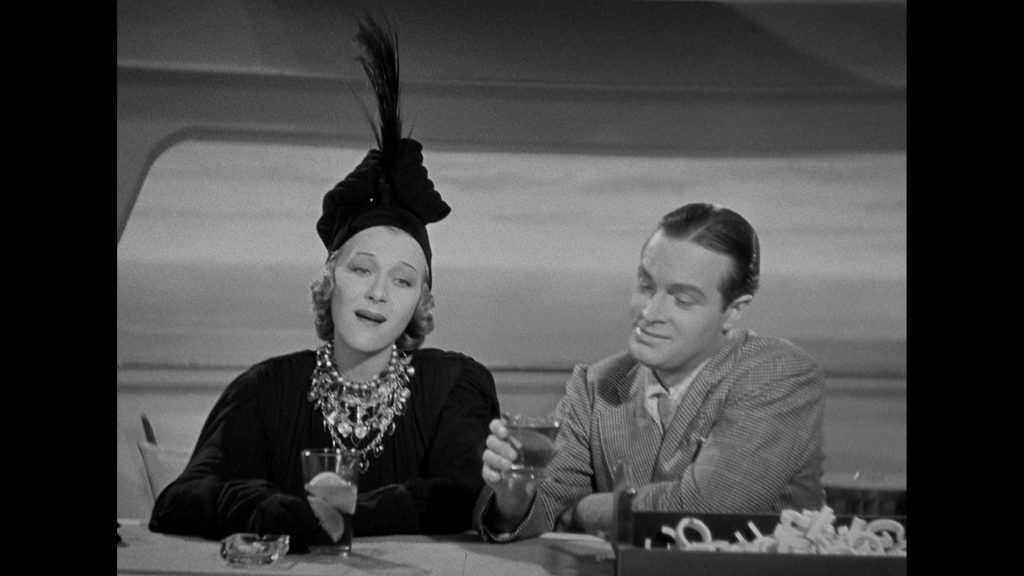
The centerpiece of Hope’s contribution to The Big Broadcast of 1938, and the film’s lasting legacy, is “Thanks for the Memory,” the bittersweet duet he performs with Shirley Ross. Written by Ralph Rainger and Leo Robin, the song won the Academy Award for Best Original Song at the 1939 ceremony. But more than that, “Thanks for the Memory” became Hope’s lifelong theme song, the melody that opened every television special, every USO show, and every public appearance for the next sixty-five years. Watching Hope perform it for the first time in The Big Broadcast of 1938 is like watching history happen. The song is tender, wistful, and genuinely moving, a far cry from the rapid-fire comedy that surrounds it, and Hope and Ross perform it with a quiet intimacy that makes everything else in The Big Broadcast of 1938 stop for three minutes of genuine emotion.
The Hope-Ross pairing was so successful in The Big Broadcast of 1938 that Paramount reunited them for Thanks for the Memory (1939) and Some Like It Hot (1939, later retitled Rhythm Romance). But it was the Road pictures with Bing Crosby and Dorothy Lamour, beginning with Road to Singapore (1940), that would make Hope one of the biggest box office stars in Hollywood. The Big Broadcast of 1938 is where all of that began, and the film deserves recognition as one of the most consequential debut performances in American comedy.
The “Thanks for the Memory” sequence itself is worth pausing to appreciate. The song is structured as a conversation between two former lovers listing the things they remember about their time together, alternating between the tender and the mundane, and the cumulative effect is deeply moving. Rainger and Robin’s lyric is a masterpiece of economy, each item in the list evoking an entire emotional landscape in a few words. Hope and Ross perform it seated together at a table on the ship, with no choreography, no spectacle, and no comedy. It is the most intimate moment in a film that is otherwise constructed entirely of spectacle, and that contrast gives “Thanks for the Memory” its emotional power. The song was ranked #63 on AFI’s 100 Years…100 Songs list in 2004, and the film received a nomination for AFI’s Greatest Movie Musicals list in 2006. For a film that contemporary critics like the New York Times’s Frank Nugent dismissed as “all loose ends and tatters,” The Big Broadcast of 1938 has had remarkable cultural staying power, almost entirely because of those three minutes of Hope and Ross singing to each other.
Film Details#
| Title | The Big Broadcast of 1938 |
| Year | 1938 |
| Director | Mitchell Leisen |
| Screenplay | Walter DeLeon, Francis Martin, Ken Englund (from an adaptation by Howard Lindsay & Russel Crouse) |
| Producer | Harlan Thompson |
| Art Direction | Hans Dreier, Ernst Fegte |
| Costumes | Edith Head |
| Songs | Ralph Rainger & Leo Robin |
| Cast | W.C. Fields, Bob Hope, Dorothy Lamour, Martha Raye, Shirley Ross, Ben Blue, Leif Erickson, Kirsten Flagstad |
| Runtime | 91 minutes |
| Rating | Approved |
| Studio | Paramount Pictures |
Audio / Video#
| Distributor | Universal Pictures Home Entertainment |
| Format | Blu-ray |
| Video | 1080p/AVC (older master, NOT a new scan) |
| Disc | BD-25 |
| Aspect Ratio | 1.37:1 (Academy) |
| Audio | DTS-HD Master Audio 2.0 Mono |
| Subtitles | English SDH |
| MSRP | $21.98 |
| Release | March 31, 2026 |
Special Features#
None.
The Rest of the Variety Show: Raye, Lamour, and a Wagner Soprano#
The variety-show format of The Big Broadcast of 1938 means the film is inherently episodic, and the individual acts range from genuinely delightful to deeply bizarre. Martha Raye gets a show-stopping musical number, “Mama, That Moon Is Here Again,” that showcases her physical comedy skills alongside her surprisingly powerful singing voice.
Raye’s performance is acrobatic and committed, and she clearly performed her own dance work without a double. Dorothy Lamour, who would become Hope’s most famous female co-star through the Road pictures, sings “You Took the Words Right Out of My Heart” with the warm, slightly exotic quality that would define her screen persona for the next two decades.
The most unexpected inclusion in The Big Broadcast of 1938 is Metropolitan Opera soprano Kirsten Flagstad, who performs Wagner’s “Brunnhilde’s Battle Cry” from Die Walkure in a sequence that would be unthinkable in any modern variety film. Flagstad was one of the most celebrated opera singers in the world in 1938, and her inclusion in The Big Broadcast of 1938 speaks to the era’s willingness to mix highbrow and lowbrow entertainment on the same screen without apology.
One minute you are watching Fields destroy a gas station; the next you are watching a world-class Wagnerian soprano in full voice. The Big Broadcast of 1938 sees no contradiction in this, and that unselfconscious eclecticism is part of its charm.
Shep Fields and His Rippling Rhythm Orchestra contribute “This Little Ripple Had Rhythm,” an instrumental number that integrates live action with animation in a surreal sequence depicting the “origin” of the rippling rhythm as an ambulatory blob of swamp water that walks to the band and teaches them its technique. It is exactly as strange as it sounds.
From the Vaults: Nothing in the Vault#
There are no special features on The Big Broadcast of 1938’s Blu-ray. No trailer. No commentary. No historical featurette. Nothing. For a film that features the debut of one of the most important entertainers in American history, the debut of one of the most famous songs in American popular culture, the final Paramount performance of one of the greatest comedians of the twentieth century, and costumes by Edith Head, the absence of any supplemental context is a significant disappointment. The Big Broadcast of 1938 is a film that cries out for a historian to explain who these people were, why this format existed, and what this particular moment in Hollywood history sounded and felt like. The bare disc provides none of that.
The Picture: An Old Master on a New Disc#
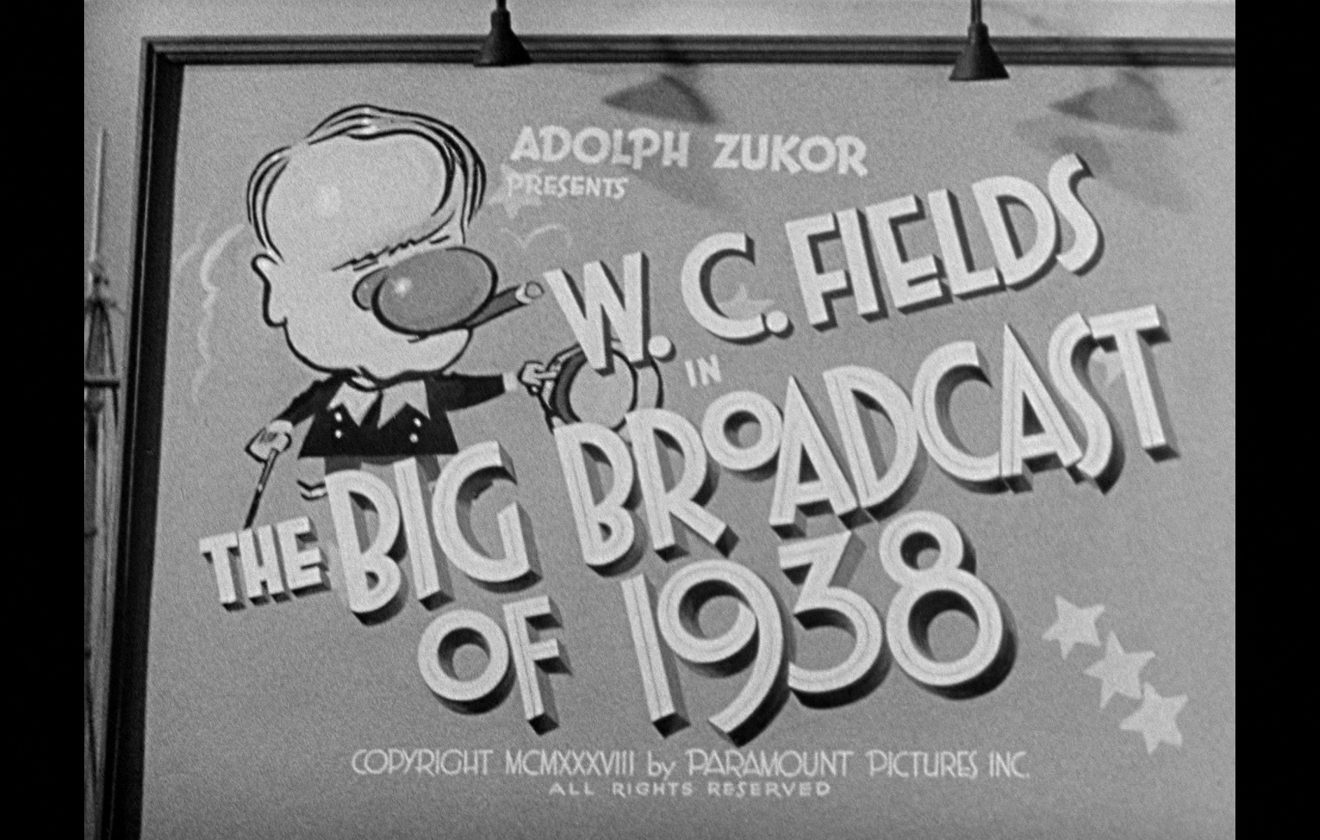
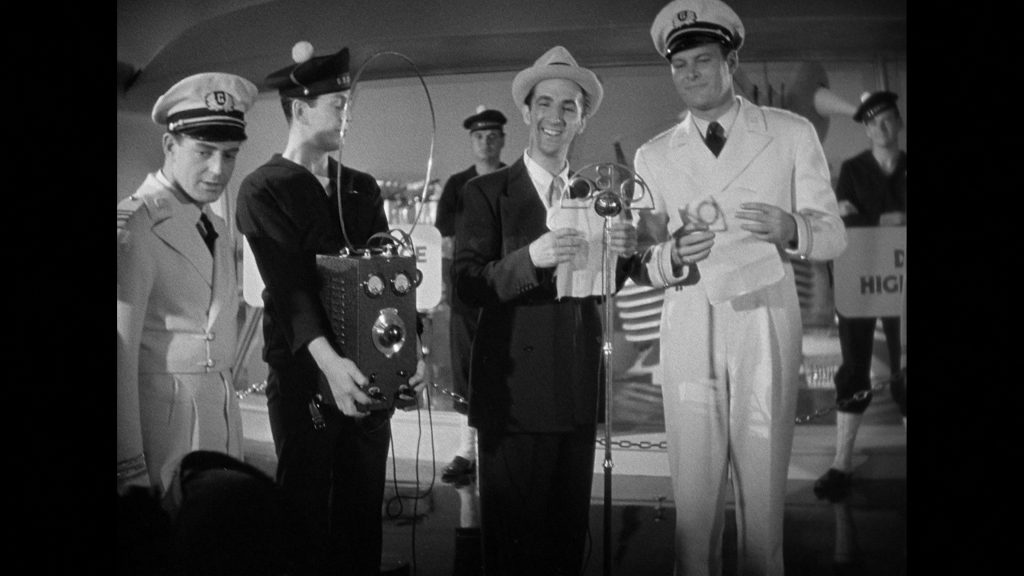
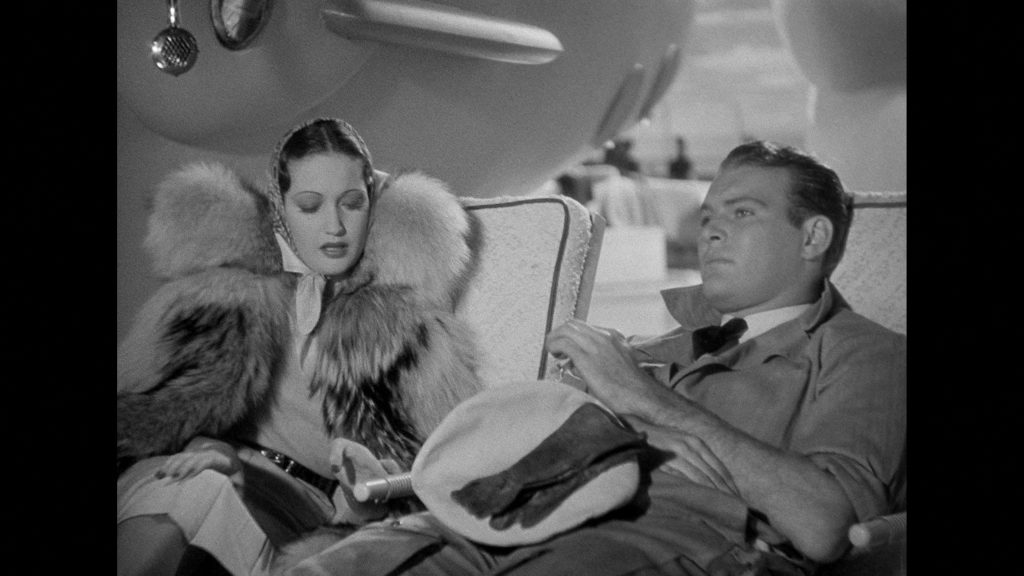
I want to be straightforward about The Big Broadcast of 1938’s video presentation, because it represents the Blu-ray’s most significant limitation. Universal has not performed a new scan of the original camera negative for this release. The existing master, which appears to be the same source used for previous DVD editions, has been encoded in 1080p/AVC on a BD-25 disc. The result is an HD presentation that is technically superior to the DVD (more resolution, better encoding) but that does not deliver the transformative upgrade that a new 4K scan from the original negative would have provided.
The image is watchable and represents a modest improvement over DVD, but it lacks the fine detail, the tonal richness, and the clean grain structure that characterize proper restorations from original camera negatives. Darker scenes can appear soft and murky. The contrast range is limited compared to what a nitrate scan would reveal.
The Big Broadcast of 1938’s elaborate Streamline Moderne sets, which should dazzle in HD given the production design pedigree (Dreier, Fegte, Bel Geddes influence), look competent rather than spectacular. Compare this transfer to the Warner Archive March 2026 releases (The Man Who Came to Dinner, Honky Tonk, It All Came True), all of which received new 4K scans from original nitrate camera negatives, and the difference in investment and results is stark.
This is not a bad-looking disc. It is a disc that represents a missed opportunity. The Big Broadcast of 1938 deserved a new restoration, and it did not get one. For collectors who have been watching the film on DVD, the Blu-ray is still an upgrade worth having. For collectors expecting the kind of revelatory presentation that labels like Warner Archive and Criterion routinely deliver from pre-war Paramount titles, this is not that.
The Sound: Mono for a Musical#
The Big Broadcast of 1938’s DTS-HD Master Audio 2.0 Mono track is clean and serviceable. The musical numbers, which are the film’s primary attraction, come through with reasonable clarity. “Thanks for the Memory” sounds good, with Hope and Ross’s vocal performances well-balanced and intelligible. The Fields comedy sequences, which rely on dialogue timing and physical comedy sound effects, are adequately presented. The lossless encoding is an improvement over the DVD’s lossy audio, but the source limitations mean the improvement is incremental rather than dramatic.
For a 1938 recording, the audio is acceptable. The musical performances retain their period charm. Fields’s notorious mumbling delivery is as challenging to decipher as it always has been, which is a feature of his performance style rather than a deficiency of the audio presentation.
The Final Verdict: Should You Buy The Big Broadcast of 1938?#
The Big Broadcast of 1938 on Blu-ray from Universal is a complicated recommendation. The film is historically significant, genuinely entertaining in its scattershot way, and unavailable in any other HD format. The transfer is a letdown. The supplements are nonexistent. The $21.98 price point is fair for what you get, but what you get is a catalog title that received minimal investment from its distributor.
Here is why I am still recommending The Big Broadcast of 1938 to physical media collectors: because buying it tells Universal that the Paramount classic catalog has an audience. The Big Broadcast of 1938 is the only film in the four-film Big Broadcast series to have ever been released on any home video format. The 1932 original, which launched Bing Crosby, has never been released on VHS, DVD, or Blu-ray. If this Blu-ray of The Big Broadcast of 1938 sells, it increases the odds that Universal will invest in proper restorations and releases of the rest of the series and the broader Paramount pre-Code and Golden Age catalog. That is worth $21.98, even if the disc itself does not represent the state of the art.
Grab The Big Broadcast of 1938 at MovieZyng. Watch it for Fields on a flying motorcycle. Watch it for Hope and Ross singing “Thanks for the Memory” for the first time. Watch it for Martha Raye’s acrobatic musical number, for Kirsten Flagstad’s Wagner, for the Streamline Moderne ocean liner that turns radio waves into horsepower. And then write Universal a note asking them to scan the negative next time, because The Big Broadcast of 1938 deserved the Warner Archive treatment and did not get it. Maybe the next one will.