Blindfolds optional. The 4K upgrade is not.
I am going to be honest with you. When the Fifty Shades 3-Movie Collection landed on my desk in its new 4K UHD repackage from Universal Pictures Home Entertainment, I did not expect to write three thousand words about it. The Fifty Shades trilogy is one of those franchises that most film critics treat like a live grenade, something to be handled quickly and disposed of with a dismissive one-liner. But there is a reason this franchise grossed over $1.3 billion worldwide, and pretending that reason does not exist is not criticism. It is snobbery. The Fifty Shades 3-Movie Collection arrives on 4K UHD as a repackage of the previously released individual 4K discs for Fifty Shades of Grey (2015), Fifty Shades Darker (2017), and Fifty Shades Freed (2018), bundled together with their companion Blu-rays and digital copies in a convenient, shelf-friendly package priced at $39.98. If you have been waiting for the right moment to own the complete Fifty Shades trilogy in 4K, this is the collection to grab. Pick it up at MovieZyng.
Let me establish something upfront. The Fifty Shades 3-Movie Collection contains the same 4K UHD transfers and the same Blu-ray bonus discs that were available in the individual releases and the previous limited edition steelbook set. This is not a new restoration or remaster. It is a repackage, consolidating three separately purchased titles into a single set at an attractive price point. For collectors who already own all three films on 4K UHD, there is no reason to double-dip. For everyone else, and especially for fans who have been buying Fifty Shades films piecemeal on DVD or streaming, the Fifty Shades 3-Movie Collection represents the most complete and cost-effective way to own the franchise in its best available format.
A few thoughts
Grey Areas: The Franchise That Would Not Quit
The cultural phenomenon of the Fifty Shades trilogy is one of the most improbable success stories in modern entertainment history, and understanding that phenomenon is essential to appreciating what this collection represents on the shelf. E.L. James began writing what would become Fifty Shades of Grey as Twilight fan fiction, posting the story online under the title “Master of the Universe.” The narrative centered on Anastasia Steele, an inexperienced college student, and Christian Grey, an enigmatic billionaire with a fondness for control in both his professional and personal lives. When James published the material as a novel in 2011, it detonated. The Fifty Shades trilogy sold over 150 million copies worldwide, became the fastest-selling paperback series in history, and fundamentally altered the publishing industry’s understanding of what mass audiences would buy and read openly.
Universal Pictures and Focus Features acquired the film rights, and after a publicly chaotic casting process that became its own media event, Dakota Johnson and Jamie Dornan were announced as Anastasia and Christian. Sam Taylor-Johnson, a respected visual artist and filmmaker, was hired to direct the first installment. The Fifty Shades 3-Movie Collection preserves the creative evolution of this franchise across all three entries, including the directorial transition from Taylor-Johnson to James Foley, who took over for Fifty Shades Darker and Fifty Shades Freed.
Fifty Shades of Grey opened on Valentine’s Day 2015 and grossed $571 million worldwide against a $40 million budget. The critical reception was largely negative, but the audience reception was massive, and the sequels were greenlit immediately. Fifty Shades Darker (2017) and Fifty Shades Freed (2018) continued the pattern: poor reviews, enormous box office returns, and a devoted audience that could not have cared less what critics thought. Universal leaned into the Valentine’s Day release window for all three films, essentially claiming the holiday as franchise territory in the same way that horror films have colonized Halloween weekend. The complete Fifty Shades trilogy grossed $1.325 billion worldwide, making it one of the highest-earning R-rated franchises in cinema history, behind only The Matrix, The Hangover, and the Alien franchise. The Fifty Shades 3-Movie Collection represents a billion-dollar franchise in a single box.
The journey from Twilight fan fiction to billion-dollar film franchise is, regardless of your opinion of the end product, one of the most remarkable publishing-to-screen stories of the modern era. E.L. James was not a Hollywood insider. She was not a credentialed novelist. She was a television executive in London who wrote fiction online for a niche community, and within a few years her characters were being played by movie stars in films that opened at number one in dozens of countries simultaneously. The Fifty Shades 3-Movie Collection is, among other things, a monument to the democratization of storytelling and the unpredictability of what audiences will embrace when given the option.
Fifty Shades of 4K: What Is in the Box
The Fifty Shades 3-Movie Collection is a six-disc set: three 4K UHD discs and three standard Blu-ray discs. Each film is presented in both its theatrical R-rated cut and its extended unrated version, giving collectors six different versions of the trilogy to explore. The unrated cuts add material across all three films, expanding the runtime from approximately 372 minutes (theatrical) to 392 minutes (unrated) for the complete set. The 4K discs contain the feature films only, while the bonus features are housed on the companion Blu-ray discs. Digital copies are included for all three titles.
The inclusion of both theatrical and unrated versions is a meaningful detail for the Fifty Shades 3-Movie Collection’s target audience. The unrated cuts of the Fifty Shades films extend several of the franchise’s more intimate sequences and restore character moments that were trimmed for the theatrical R-rating. The differences are most significant in Fifty Shades Darker, where the unrated version adds approximately fourteen minutes of material. Whether you prefer the tighter theatrical cuts or the more expansive unrated versions is a matter of personal taste, but having both options on the same disc set means you never have to choose. The Fifty Shades 3-Movie Collection gives you every version of every film in the franchise.
This is a substantial amount of content. The Fifty Shades 3-Movie Collection is not a bare-bones repackage. It carries forward every bonus feature that was included on the individual releases, and there are quite a few of them. For fans of the franchise who want a single set that contains everything, the Fifty Shades 3-Movie Collection delivers.
Fifty Shades: 3-Movie Collection: Film Info, Tech Specs, and Special Features
| Film Details | |
|---|---|
| Films Included | Fifty Shades of Grey (2015), Fifty Shades Darker (2017), Fifty Shades Freed (2018) |
| Directors | Sam Taylor-Johnson (Grey), James Foley (Darker, Freed) |
| Screenplay | Kelly Marcel (Grey), Niall Leonard (Darker, Freed) |
| Based On | The novels by E.L. James |
| Cast | Dakota Johnson, Jamie Dornan, Jennifer Ehle, Kim Basinger, Marcia Gay Harden, Eric Johnson, Rita Ora, Luke Grimes, Eloise Mumford, Victor Rasuk, Bella Heathcote |
| Producers | Michael De Luca, E.L. James, Dana Brunetti, Marcus Viscidi |
| Combined Runtime | 372 min. (theatrical) / 392 min. (unrated) |
| Rating | R (theatrical) / Unrated (extended cuts) |
| Combined Worldwide Gross | $1.325 billion |
| Technical Specifications | |
|---|---|
| Distributor | Universal Pictures Home Entertainment |
| Format | 4K UHD + Blu-ray + Digital |
| Number of Discs | 6 (3 4K UHD + 3 Blu-ray) |
| Video | 2160p HEVC H.265 |
| HDR | HDR10 |
| Aspect Ratio | 2.40:1 |
| Audio | English DTS:X / DTS-HD Master Audio 7.1, DTS Headphone:X, French DTS 5.1, Spanish DTS 5.1 |
| Subtitles | English SDH, French, Spanish |
| Region | Region Free (all discs) |
| Versions Included | Theatrical and Unrated cuts for all three films |
| Digital Copy | Included for all three films |
| MSRP | $39.98 |
| Release Date | February 3, 2026 |
| Special Features (on Blu-ray discs) | |
|---|---|
| Fifty Shades of Grey | The World of Fifty Shades of Grey: Christian Grey; The World of Fifty Shades of Grey: Ana; The World of Fifty Shades of Grey: Friends and Family; Behind the Shades; E L James & Fifty Shades; Fifty Shades: The Pleasure of Pain; Christian’s Apartment: 360° Set Tour; Music Videos; Behind the Scenes of “Earned It”; Tease of Fifty Shades Darker |
| Fifty Shades Darker | A Tease to Fifty Shades Freed; Deleted Scenes; Writing Darker; A Darker Direction; Dark Reunion; New Threats; The Masquerade; Intimate with Darker; An Intimate Conversation with EL James and Eric Johnson |
| Fifty Shades Freed | The Final Climax (multi-part documentary including The Wedding, Honeymoon, and more); Deleted Scene; Christian and Ana by Jamie and Dakota; Music Videos (“For You” by Liam Payne & Rita Ora, “Capital Letters” by Hailee Steinfeld & BloodPop, “Heaven” by Julia Michaels) |
From the Vaults: A Generous Supplemental Package
Unlike some of the bare-bones 4K releases I have covered recently, the Fifty Shades 3-Movie Collection comes loaded with bonus content. The special features live on the Blu-ray companion discs rather than the 4K discs themselves, which is a common approach for Universal’s 4K releases, but the material is substantial and well worth exploring for anyone interested in the production history of this unusually scrutinized franchise.
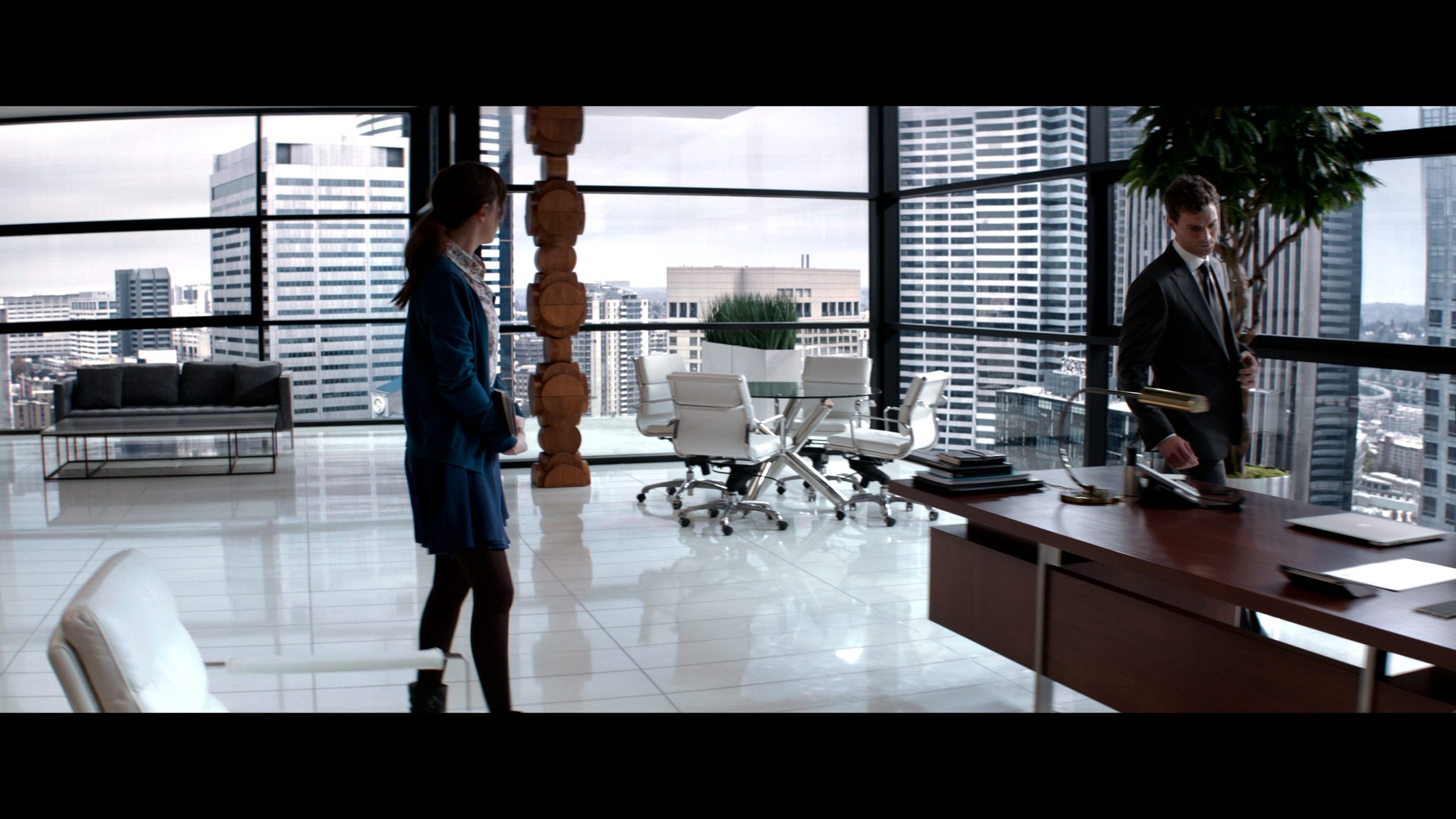
The first film’s supplements are the most extensive, with multiple featurettes exploring the world-building of the Fifty Shades universe, the design of Christian Grey’s apartment (including a 360-degree set tour that lets you examine every detail of the production design), and behind-the-scenes looks at the music that defined the franchise’s soundtrack. The “Earned It” featurette is particularly notable for fans of The Weeknd’s Oscar-nominated contribution to the first film’s sonic identity. The “Pleasure of Pain” featurette addresses the film’s BDSM elements with a candor that the marketing campaign carefully avoided, and E.L. James’s own featurette provides the author’s perspective on seeing her characters brought to life. Sam Taylor-Johnson’s visual sensibility is discussed in “Behind the Shades,” which offers insight into the directorial choices that gave the first film its distinctive cold-to-warm color arc.
Fifty Shades Darker’s bonus disc includes deleted scenes and several production featurettes covering the writing process, the directorial transition to James Foley, and the elaborate masquerade ball sequence that serves as the film’s visual centerpiece. The “Writing Darker” segment is unexpectedly candid about the challenges of adapting the second novel, which has a more conventional thriller structure than the first. “A Darker Direction” covers Foley’s approach to differentiating his entries from Taylor-Johnson’s original, and “New Threats” explores the introduction of the franchise’s antagonists. The conversation between E.L. James and Eric Johnson offers a candid look at how the source material was adapted for the sequel’s darker tone, and it is one of the more interesting supplements in the entire Fifty Shades 3-Movie Collection for anyone curious about the creative tensions that shaped these films.
Fifty Shades Freed rounds out the collection with “The Final Climax,” a multi-part documentary running over thirty minutes that covers the franchise’s conclusion from multiple angles. This is the most substantial single supplement in the Fifty Shades 3-Movie Collection, broken into segments covering the wedding sequence (including the production and costume design behind the elaborate ceremony), the French Riviera honeymoon shoot (and the logistical challenges of filming on a yacht), and the resolution of the Jack Hyde thriller plotline. The Jamie Dornan and Dakota Johnson retrospective, “Christian and Ana by Jamie and Dakota,” provides a surprisingly honest look back at the actors’ journey through all three films, and both performers come across as more self-aware about the franchise’s place in the cultural conversation than the films themselves sometimes suggest. The music video collection featuring Liam Payne, Rita Ora, Hailee Steinfeld, and Julia Michaels provides a nice coda for fans of the trilogy’s consistently strong soundtracks.
The creative dynamic between E.L. James and the filmmakers is one of the most fascinating behind-the-scenes stories in modern franchise filmmaking, and the supplements in the Fifty Shades 3-Movie Collection hint at it without fully exploring it. James wielded unusual creative control for a source author, particularly after the first film. Her influence over casting, scripting (her husband Niall Leonard wrote the screenplays for the second and third films), and the overall direction of the franchise was well-documented in the press, and the departure of Sam Taylor-Johnson was widely attributed to creative disagreements with James. The supplemental features in the Fifty Shades 3-Movie Collection present the authorized version of this story, but even the authorized version is more interesting than many franchise making-of materials manage to be.
For the franchise’s audience, this supplemental package justifies the physical media purchase. Streaming versions of the Fifty Shades films do not include this material, and the behind-the-scenes content provides genuine insight into the production challenges of adapting one of the most scrutinized literary properties of the 21st century.
The Picture: Seattle Never Looked This Good (or This Grey)
The 4K UHD presentations across the Fifty Shades 3-Movie Collection are consistently strong, with each film offering a notable upgrade over its standard Blu-ray counterpart. All three films are presented in 2.40:1 widescreen at 2160p with HDR10 high dynamic range.
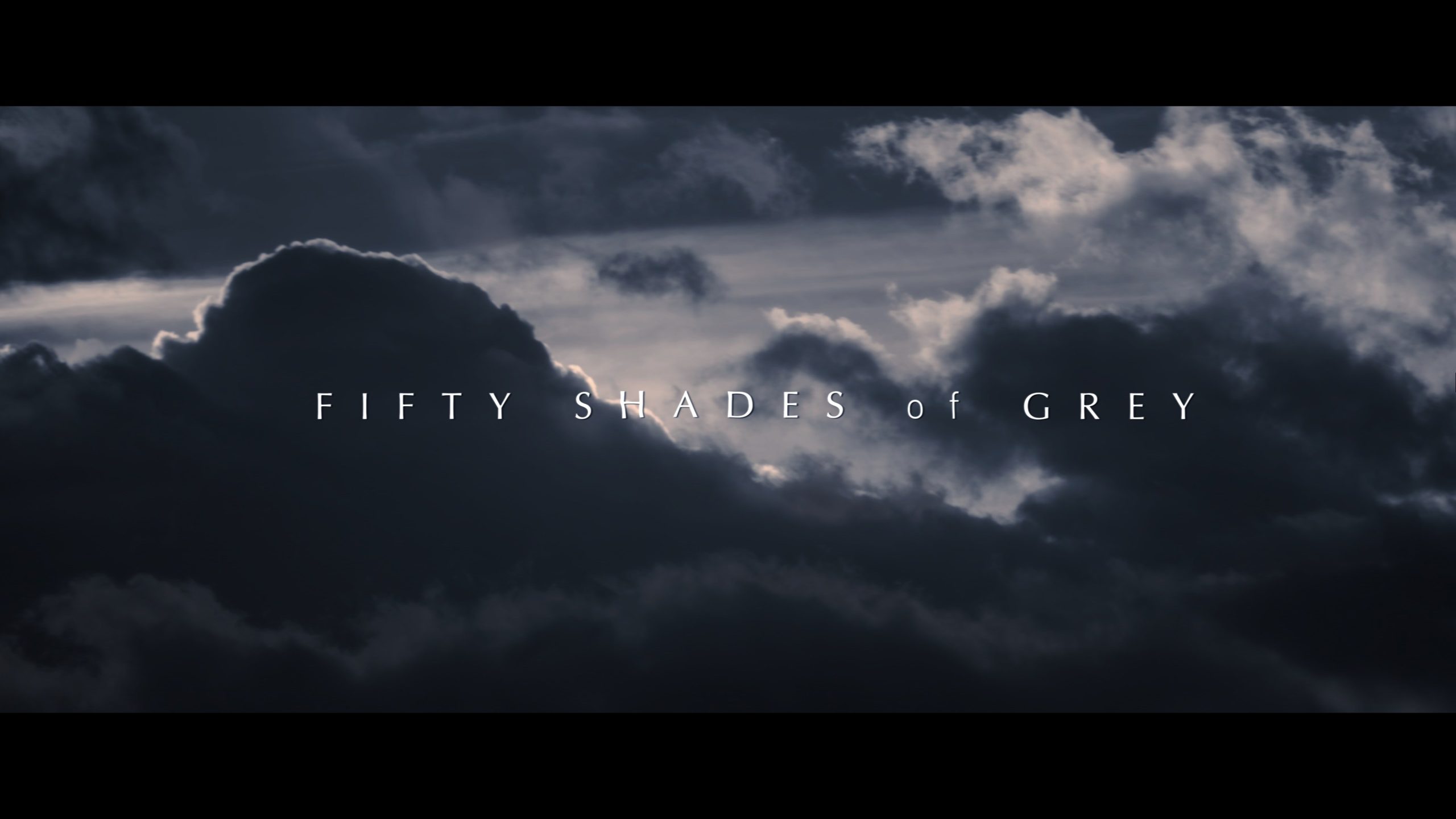
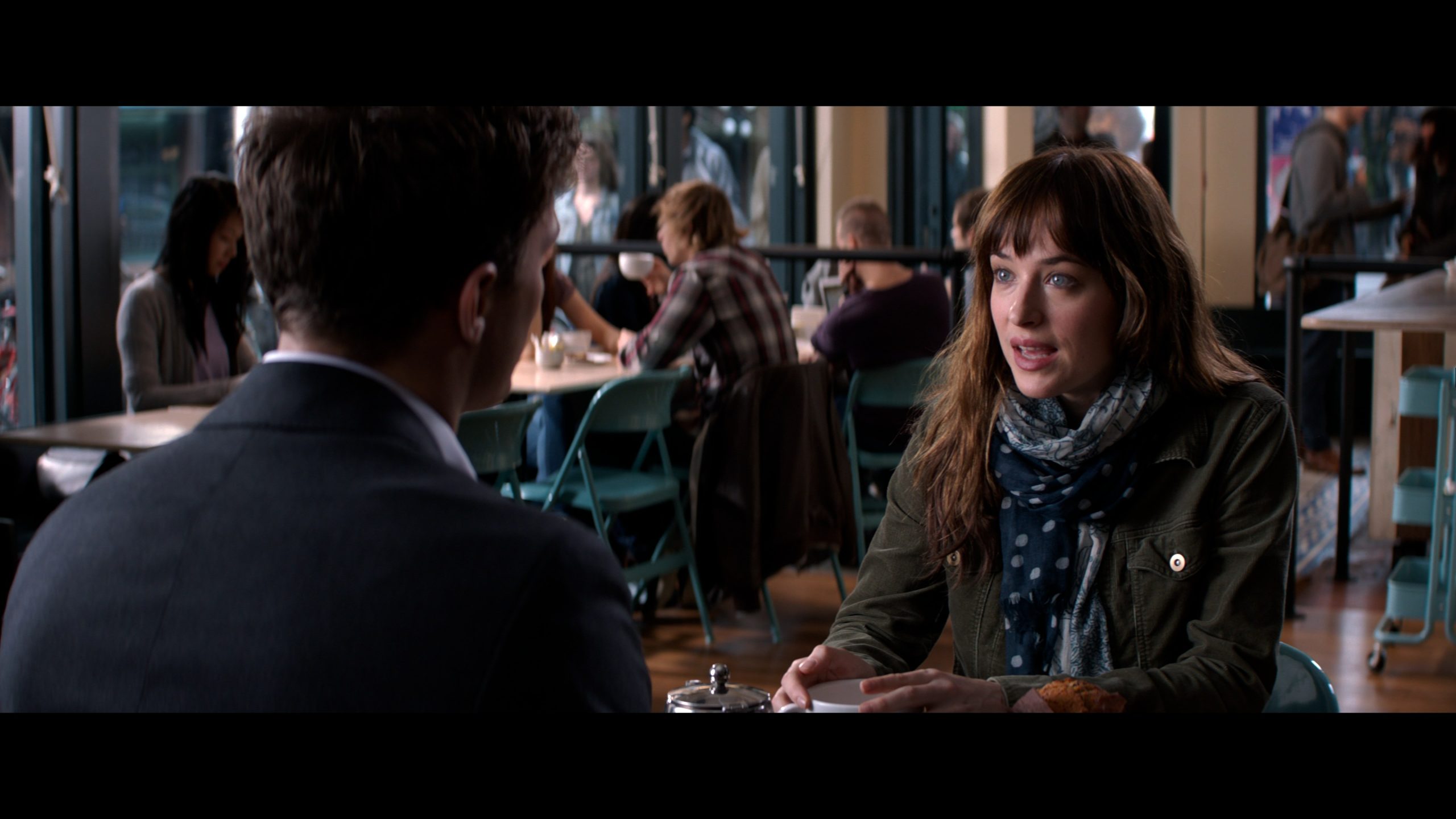
Fifty Shades of Grey employs a deliberately muted, overcast color palette that reflects the Pacific Northwest setting. Cinematographer Seamus McGarvey’s work is moody and restrained in the early going, with the HDR10 grading adding depth to the grey (pun intended) Seattle skies and the cool, clinical interiors of Christian’s apartment. When the color palette warms in the latter third, the 4K presentation captures the shift with precision. Skin tones are natural throughout, and the contrast improvements over the standard Blu-ray are most visible in the film’s darker interiors, where shadow detail is noticeably more refined.
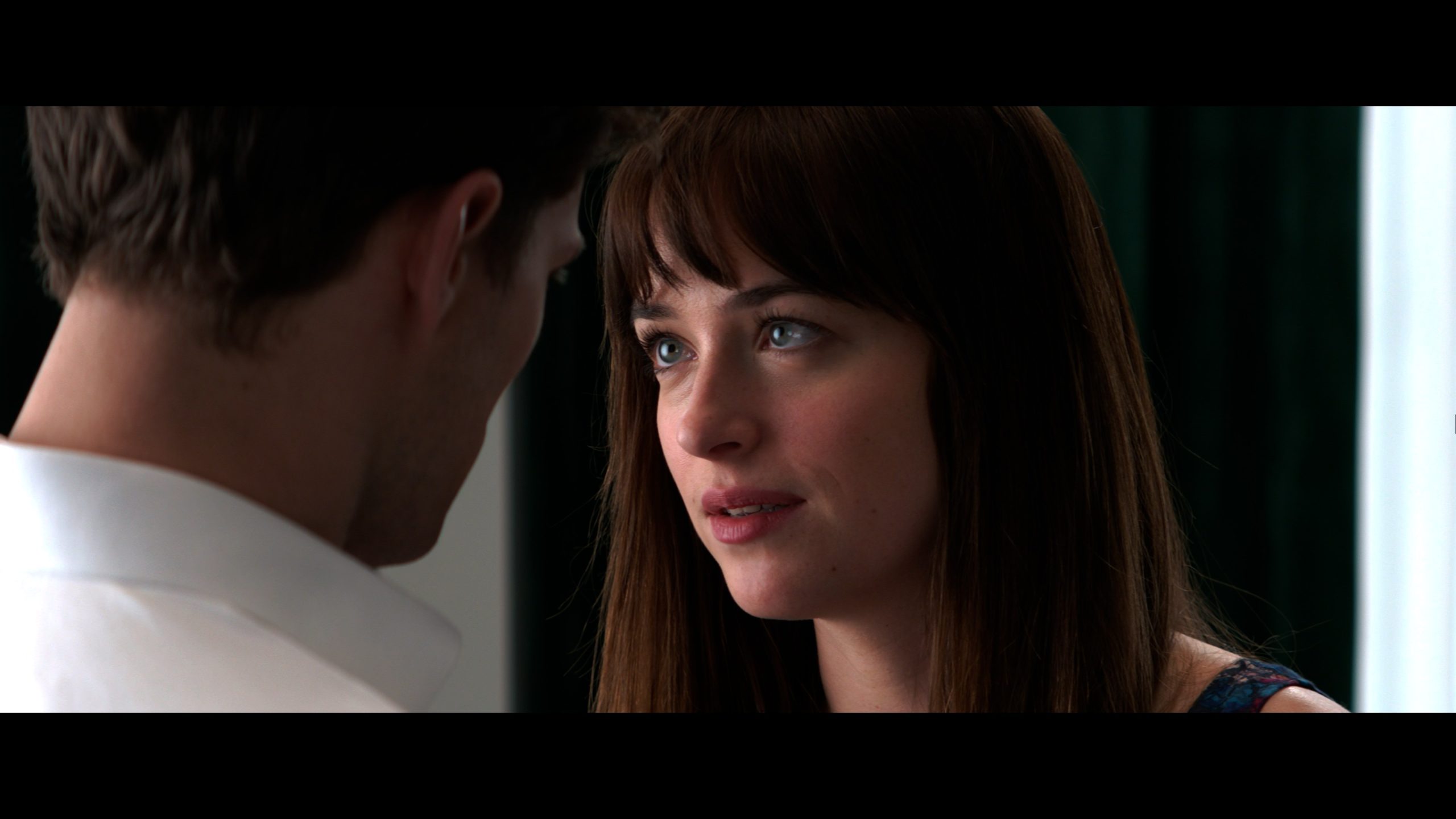
James Foley’s Fifty Shades Darker and Fifty Shades Freed are more visually adventurous than the first film, and the 4K presentations benefit accordingly. Fifty Shades Darker’s masquerade ball sequence is the visual highlight of the entire collection, with the ornate costumes, candlelit atmosphere, and rich production design all popping in HDR. Fifty Shades Freed, which expands the franchise’s visual scope to include the French Riviera honeymoon sequences, delivers the warmest and most vibrant imagery of the three films. The Mediterranean sunlight, the yacht interiors, and the lush tropical landscapes all receive a noticeable boost from the increased color volume and brightness range of the HDR10 presentation.
None of the three films represent reference-quality 4K demo material, but all three look meaningfully better than their Blu-ray counterparts. The HDR grading is tasteful and restrained, avoiding the over-cooked look that can plague poorly executed HDR mastering. For fans upgrading from DVD or standard Blu-ray, the visual improvement across the Fifty Shades 3-Movie Collection is substantial.
The Sound: DTS:X and the Art of Atmosphere
The audio across the Fifty Shades 3-Movie Collection is presented in DTS:X, which provides immersive object-based sound for compatible systems while folding down gracefully to DTS-HD Master Audio 7.1 for standard surround setups. This is one area where the Fifty Shades films quietly excel. The trilogy’s soundtracks, curated with genuine care and featuring artists from The Weeknd to Sia to Ellie Goulding to Beyonce, are consistently excellent, and the DTS:X mixes give them room to envelop the listener.
These are not action-heavy films demanding aggressive surround use. The DTS:X presentation is at its best during the musical sequences, where the immersive audio creates a sense of being inside the music rather than merely hearing it. Rain, ambient city noise, and the atmospheric textures of the various locations all benefit from the overhead channels when the mix utilizes them. Dialogue is clean and centered throughout all three films. The LFE channel provides tasteful low-end reinforcement during the musical sequences without overwhelming the mix.
The Elephant in the Red Room: Critical Honesty
I am not going to pretend that the Fifty Shades trilogy represents great cinema. The critical consensus on these films ranges from lukewarm to hostile, and many of those criticisms are valid. The dialogue can be stilted. Jamie Dornan’s Christian Grey is, to be charitable, an understated presence. The plots, particularly in the second and third films, rely on contrived thriller elements that sit uneasily alongside the romantic melodrama. The handling of consent and BDSM dynamics has been extensively debated and criticized by both mainstream audiences and the BDSM community itself.
But critical opinion does not exist in a vacuum. The Fifty Shades 3-Movie Collection represents a franchise that connected with an enormous global audience, predominantly female, in ways that mainstream criticism has struggled to explain or engage with honestly. Dakota Johnson’s performance improves significantly across the trilogy, and she deserves credit for bringing genuine warmth and humor to a role that could easily have been thankless. Johnson has spoken candidly in interviews about the challenges of making these films, and her willingness to inject personality into Anastasia, particularly in the later installments, elevates material that could have been purely mechanical. Her career since the Fifty Shades franchise has demonstrated range and taste, with roles in Suspiria (2018), The Lost Daughter (2021), and Daddio (2024) confirming that she was always a more interesting performer than the franchise’s detractors wanted to acknowledge.
The production design across all three films is genuinely impressive, particularly Fifty Shades Darker’s elaborate masked ball and Fifty Shades Freed’s Mediterranean locations. The soundtracks are uniformly excellent, curated with a commercial savvy that turned the Fifty Shades musical brand into its own revenue stream. And whatever you think of the source material, the franchise represents a rare instance of mass-market entertainment centering female desire and female perspective in a genre landscape dominated by male-gaze action spectacle.
The directorial transition from Sam Taylor-Johnson to James Foley between the first and second films is worth discussing in the context of the Fifty Shades 3-Movie Collection. Taylor-Johnson brought a visual artist’s eye to Fifty Shades of Grey, lending the first film a moodier, more restrained aesthetic that some viewers appreciated and others found cold. The widely reported creative disagreements between Taylor-Johnson and author E.L. James led to the director’s departure. Foley, best known for directing Glengarry Glen Ross (1992) and several episodes of House of Cards, brought a more conventional thriller sensibility to Fifty Shades Darker and Fifty Shades Freed. Watching the three films back-to-back in the Fifty Shades 3-Movie Collection, the stylistic shift is noticeable but not jarring, and Foley’s willingness to lean into the melodrama gives the second and third films an operatic quality that the first film deliberately avoids.
The Fifty Shades trilogy also served as a launchpad for several supporting performers worth noting in the Fifty Shades 3-Movie Collection. Kim Basinger’s appearance in Fifty Shades Darker and Fifty Shades Freed as Elena Lincoln marked a notable return for the Oscar-winning actress. Rita Ora, primarily known as a recording artist, took on the role of Mia Grey across all three films. Marcia Gay Harden brought genuine gravitas to the role of Christian’s adoptive mother. And Eric Johnson’s Jack Hyde, who serves as the primary antagonist of the second and third films, provides the franchise with a thriller element that gives the later entries in the Fifty Shades 3-Movie Collection a propulsive energy the first film lacked.
Why the Repackage Matters for Physical Media Collectors
The Fifty Shades 3-Movie Collection serves a practical purpose in the physical media ecosystem. Previously, owning the complete trilogy on 4K UHD required purchasing three separate releases or tracking down the limited edition steelbook set, which has become increasingly difficult to find at reasonable prices. This repackage consolidates everything into a single, attractively priced set that lowers the barrier to entry for collectors who want the complete franchise in its best format.
At $39.98 for six discs, three films in 4K with HDR10, three companion Blu-rays loaded with bonus features, and three digital copies, the Fifty Shades 3-Movie Collection represents genuine value. That is roughly $13.33 per film for a 4K UHD with bonus disc and digital copy. For a franchise that generated $1.3 billion in theaters, the home video pricing is remarkably accessible.
There is also the simple reality that the Fifty Shades films are not the kind of titles that streaming platforms prioritize for permanent availability. They cycle in and out of catalogs. They appear on one service, disappear, reappear on another. Owning the Fifty Shades 3-Movie Collection on disc means the complete trilogy, in both theatrical and unrated cuts, with all bonus features, is permanently available regardless of what Netflix, Peacock, or any other platform decides to stock next month. For a franchise with this level of cultural footprint, permanent access on physical media is worth the investment. The Fifty Shades 3-Movie Collection is available now at MovieZyng.
The Safe Word: Should You Buy the Fifty Shades 3-Movie Collection?
If you are a fan of the Fifty Shades franchise who has been streaming these films or watching them on DVD, the Fifty Shades 3-Movie Collection on 4K UHD is the definitive way to own the trilogy. The visual upgrades are real, the DTS:X audio is the best these soundtracks have ever sounded at home, and the bonus features provide hours of supplemental content that streaming does not include.
If you already own all three films individually on 4K UHD, this repackage does not add new content. Save your money. But if you are missing one or more films in the set, or if you want to consolidate your collection into a single, cleaner package, the Fifty Shades 3-Movie Collection is the smart buy.
And if you have never watched the Fifty Shades films and are curious about why a franchise that critics largely despised became one of the highest-grossing R-rated series in history, well, this is your invitation. The Fifty Shades 3-Movie Collection does not apologize for what it is. Neither should you. Grab it at MovieZyng and find out for yourself.